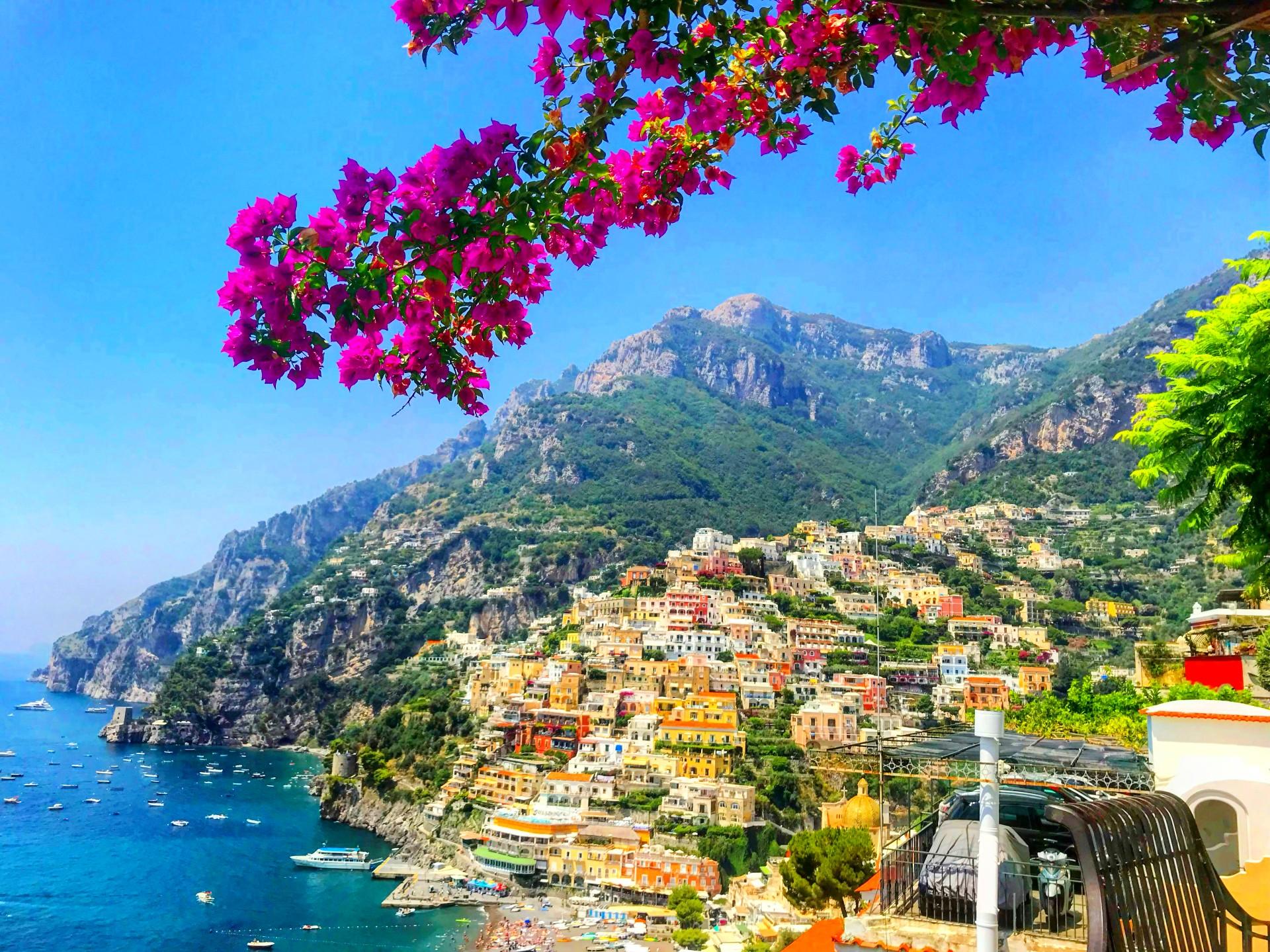
13 hr
Pompeii, Amalfi Coast & Sorrento Full-Day Tour from Rome
- Expert local guide
- Small group
- Skip-the-line access
- Free cancellation
Rome to Pompeii Tour by Train — Reserved Entry & Day Excursions
High-speed rail to the Vesuvian ruins, ancient streets waiting beneath the ash
Compare fares, pick the fit — all bookings are mobile-voucher and eligible for free cancellation where shown.
13 hr
12 hr
9 hr
| Experience | From | Duration | Rating | Transfers | Skip-the-line | Guide | Price | |
|---|---|---|---|---|---|---|---|---|
|
Guided Experience
Most popular
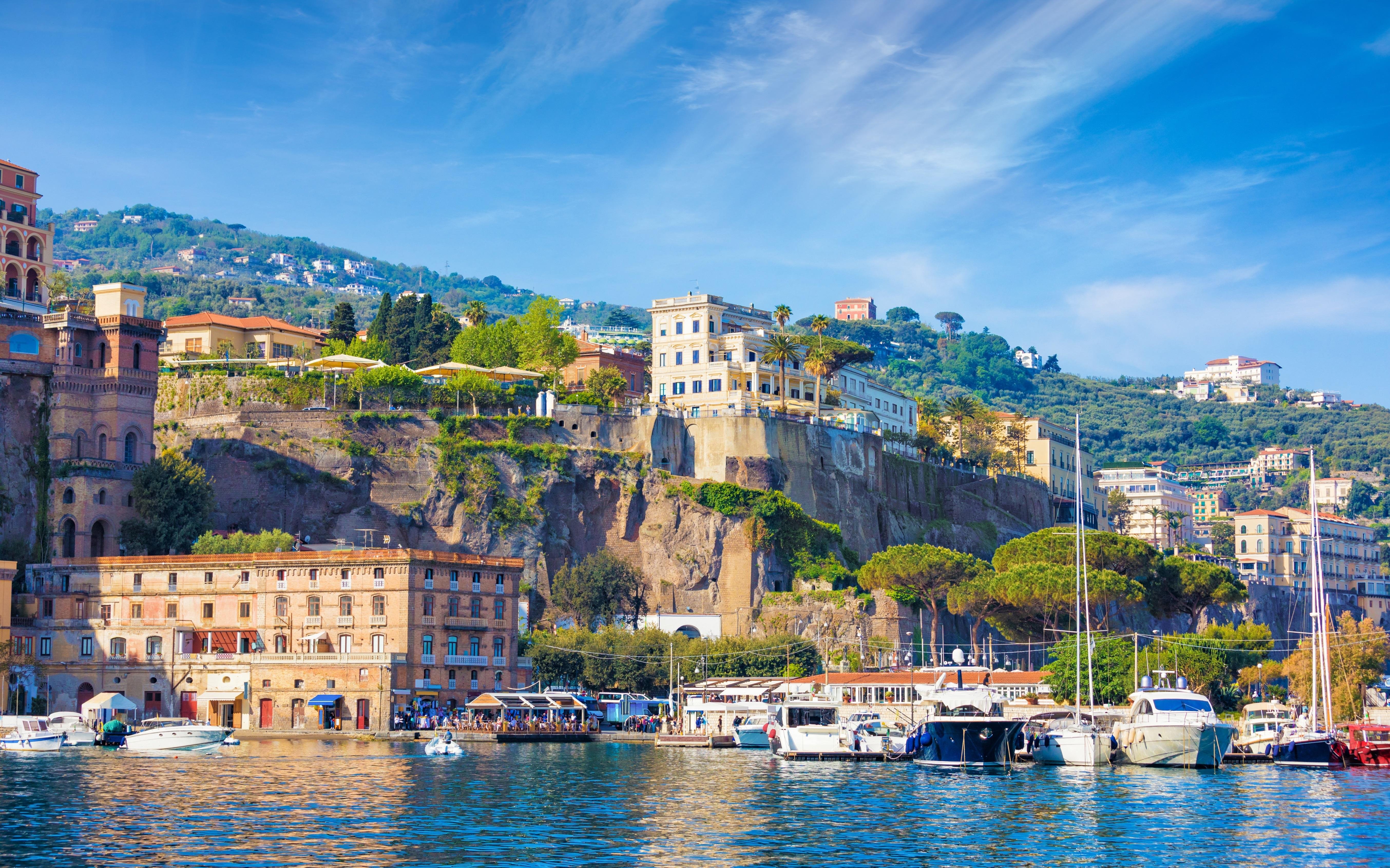
Pompeii, Amalfi Coast & Sorrento Full-Day Tour from Rome
|
Rome | 13 hr | ★ 4.6 | ✓ | ✓ | ✓ | €84 | Book → |
|
Guided Experience
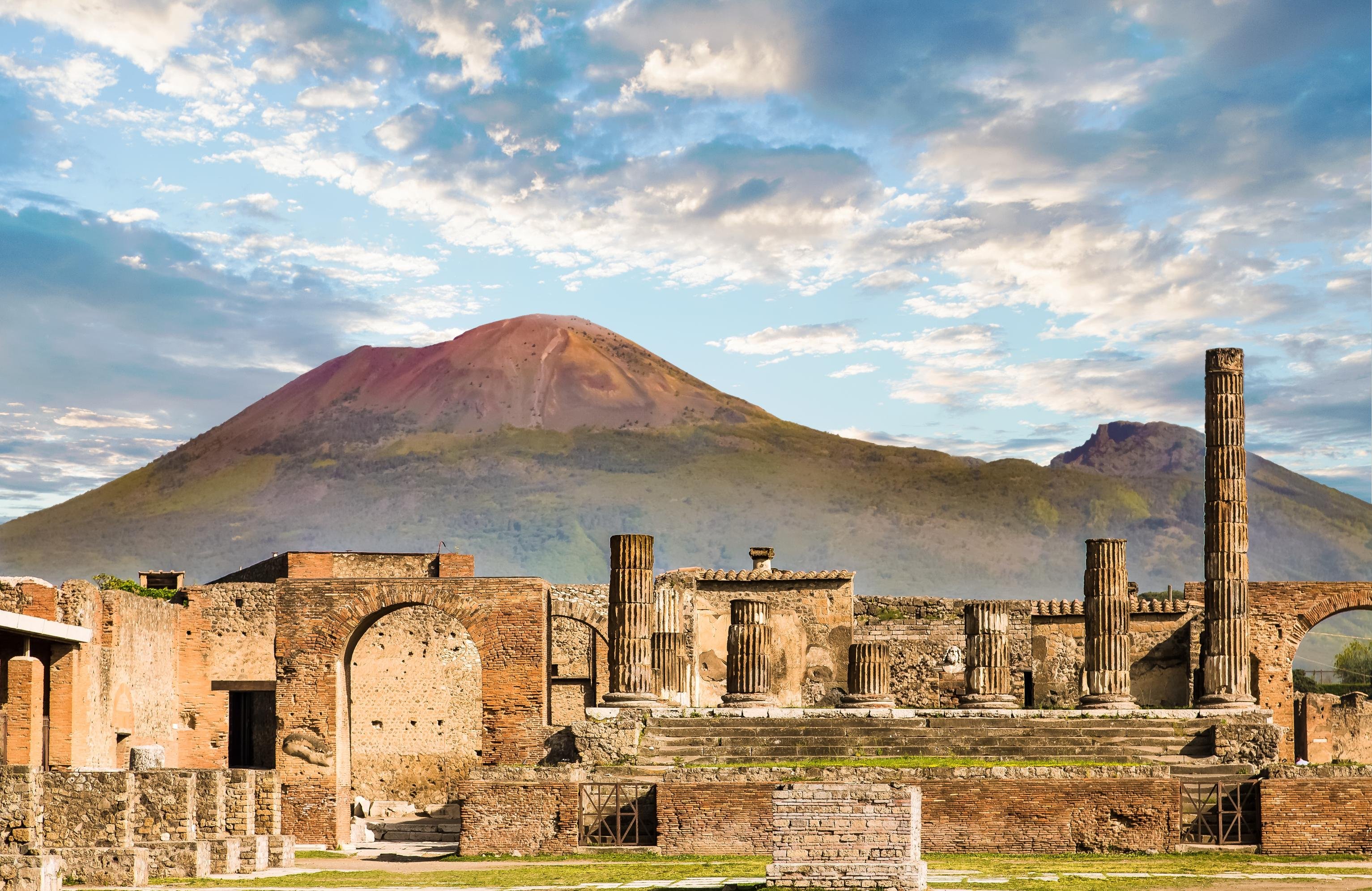
Pompeii Day Tour from Rome with Optional Vesuvius Visit
|
Rome | 12 hr | ★ 4.6 | ✓ | ✓ | ✓ | €56 | Book → |
|
Guided Experience
Pompeii Express: High-Speed Rail Day Trip from Rome
|
Rome | 9 hr | ★ 4.9 | ✓ | ✓ | ✓ | €97 | Book → |
Worth it for history lovers and first-time visitors
The 20 EUR entrance fee delivers exceptional value when measured against what you're actually accessing: a frozen Roman city spanning 66 hectares, with frescoed villas, intact amphitheaters, and streets where chariot ruts still mark the stone. For visitors making the rome to pompeii tour by train, the round-trip transit adds roughly 3–4 hours, but the archaeological site itself justifies both the ticket price and the travel effort. The excavated ruins offer unfiltered access to Forum spaces, thermal baths, and residential quarters that textbooks can't replicate. Budget-conscious travelers will appreciate that the standard Pompeii Express ticket covers the core archaeological park without upsells for the main highlights. Day-trippers seeking tangible Roman history—mosaics, bakery ovens, plaster casts from the eruption—will find the investment pays off in direct proportion to their interest in ancient urban life. Casual sightseers with limited time may find the site's scale and exposed terrain more demanding than anticipated, but those drawn to Vesuvius's legacy and preserved domestic architecture consistently rate the experience as worthwhile.
Bottom line: For anyone drawn to Roman archaeology, the rome to pompeii tour by train tickets deliver tangible historical immersion that justifies both the fare and the effort.
Independent travel suits those prioritizing autonomy, while an organized Rome to Pompeii tour by train provides a seamless, stress-free path through the UNESCO heritage site. Most visitors find that while the independent route allows for personal discovery, the guided option provides significantly deeper insights into the Roman archaeology.
|
Top pick Independent Train Trip |
Organized Guided Tour | |
|---|---|---|
| Logistical Planning | High effort required | Done by provider |
| Cost | 20 EUR standard fee | 150–250 EUR avg |
| Flexibility | Full personal control | Fixed group schedule |
| Historical Context | Self-guided research | Professional archaeologist guide |
| Comfort | Standard public transit | Private coach and train |
| Pacing | Set your own speed | Group-dependent speed |
| See tickets & prices |
Verdict: Opt for the independent rome to pompeii tour by train if you prefer solitude, or select the guided rome to pompeii tour by train tour for expert storytelling and convenience regarding your rome to pompeii tour by train tickets.
Hand-picked experiences loved by thousands of travelers
9 hours
Free Cancellation
Skip the long bus ride and reach Pompeii in comfort via high-speed rail, with guided ruins tour and vineyard lunch
11 hours
Free Cancellation
Journey by express train to explore ancient Pompeii's ruins and savor Naples' legendary pizza culture
13 hours
Free Cancellation
Discover ancient ruins buried by Vesuvius and explore the vibrant streets of Naples on this all-day adventure.
11 hours
Free Cancellation
Journey by express train to explore two ancient cities buried by Vesuvius with an archaeologist guide
1 day
Free Cancellation
Journey by fast train to explore the ancient streets and stunning frescoes of this remarkably preserved Roman city.
12.5 hours
Free Cancellation
Ancient ruins meet dramatic coastal scenery on this full-day escape from the capital
11 hours
Free Cancellation
Skip coastal traffic and cruise between Positano and Amalfi by boat, departing Rome via high-speed rail.
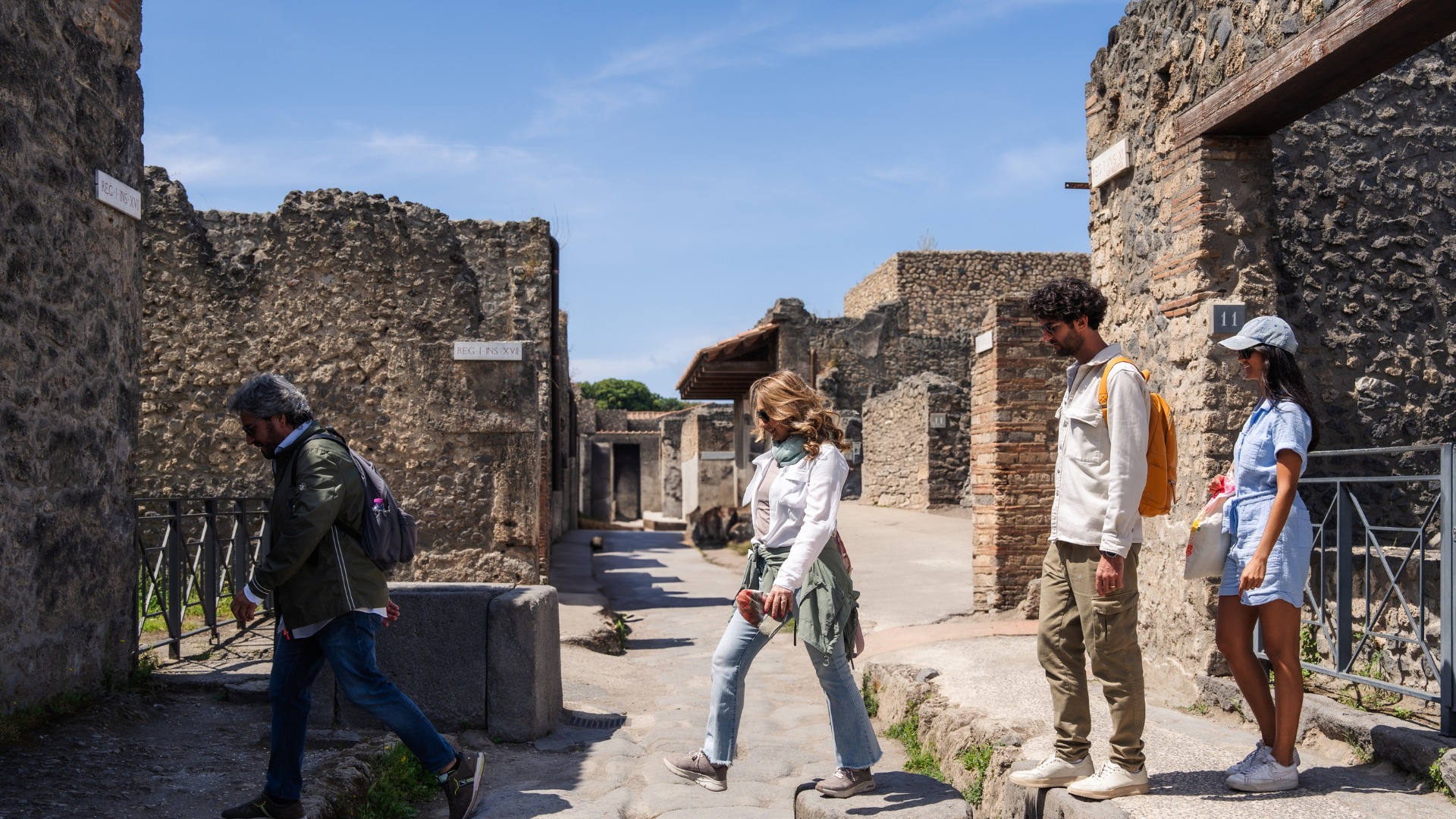
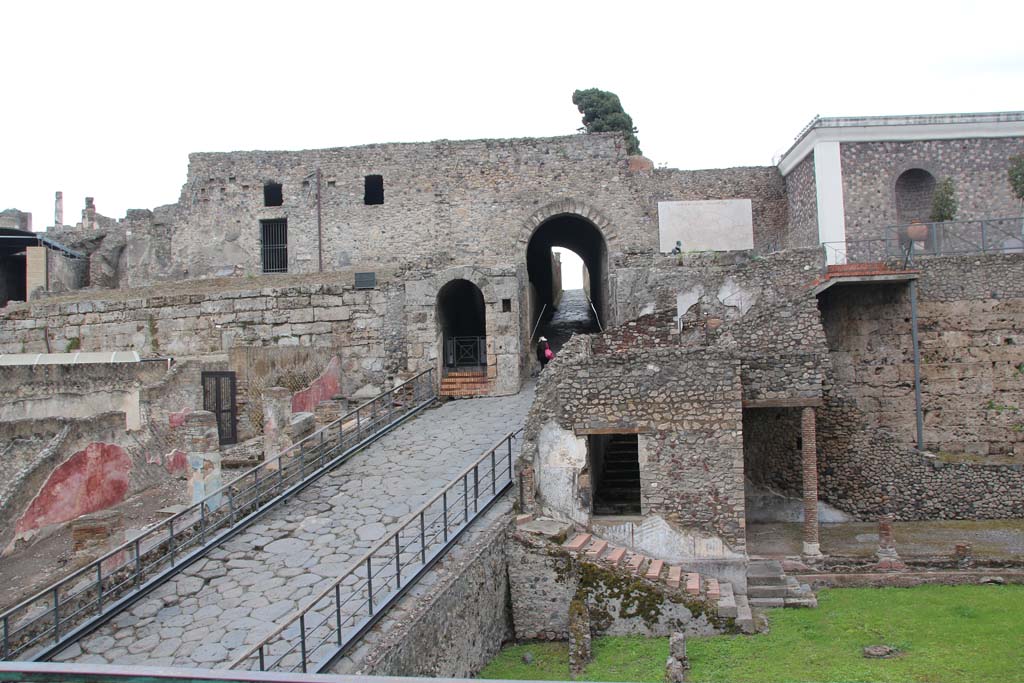
Passing security at Via Villa dei Misteri
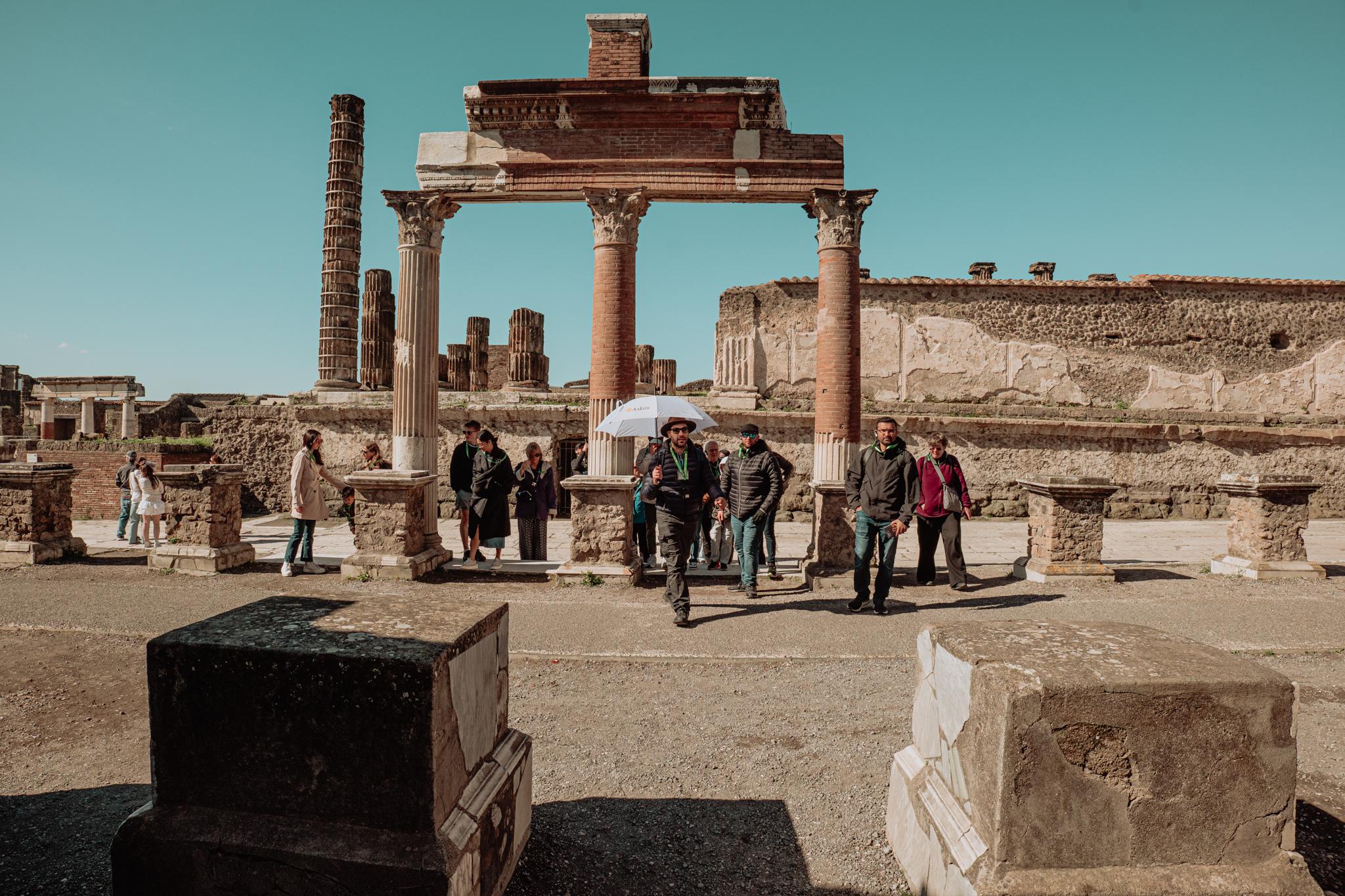
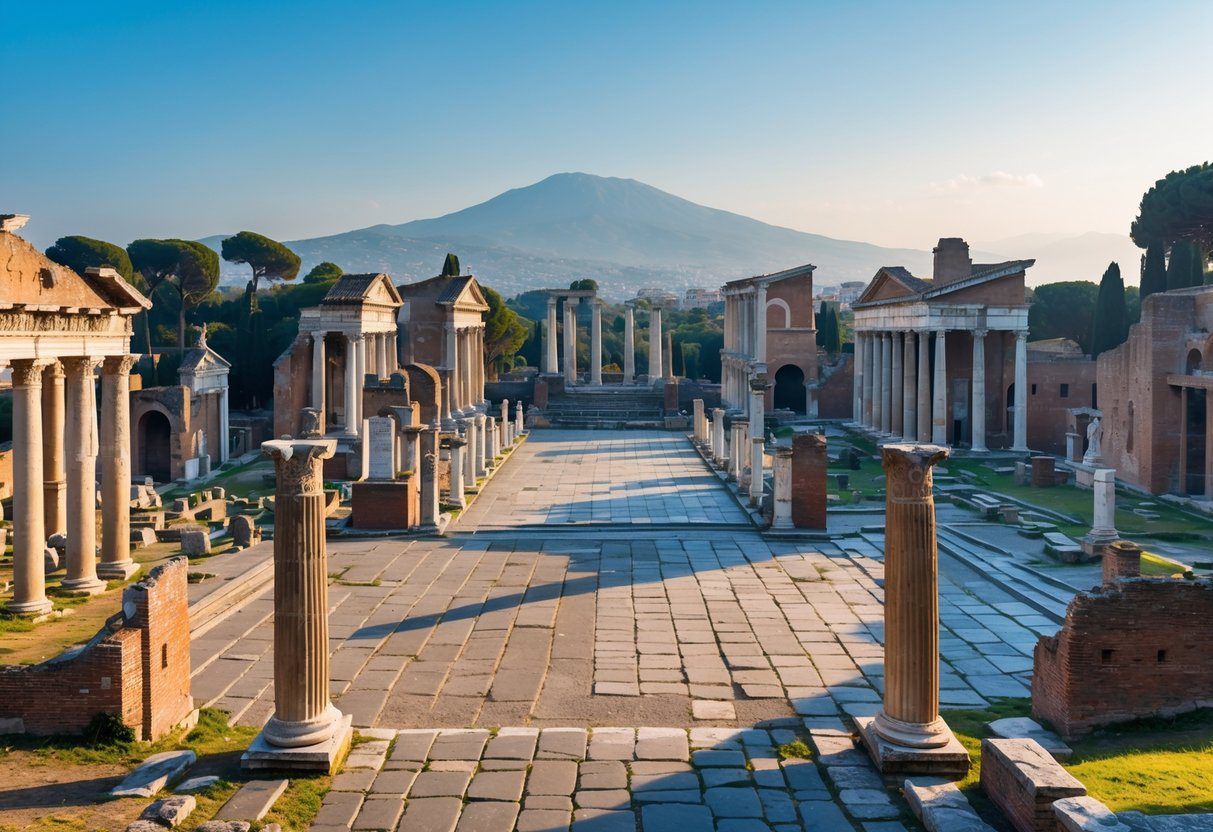
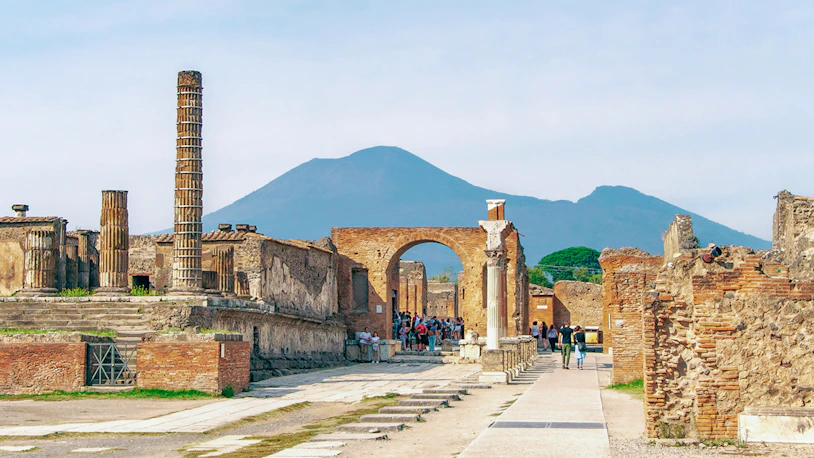
Exploring the heart of the Roman city
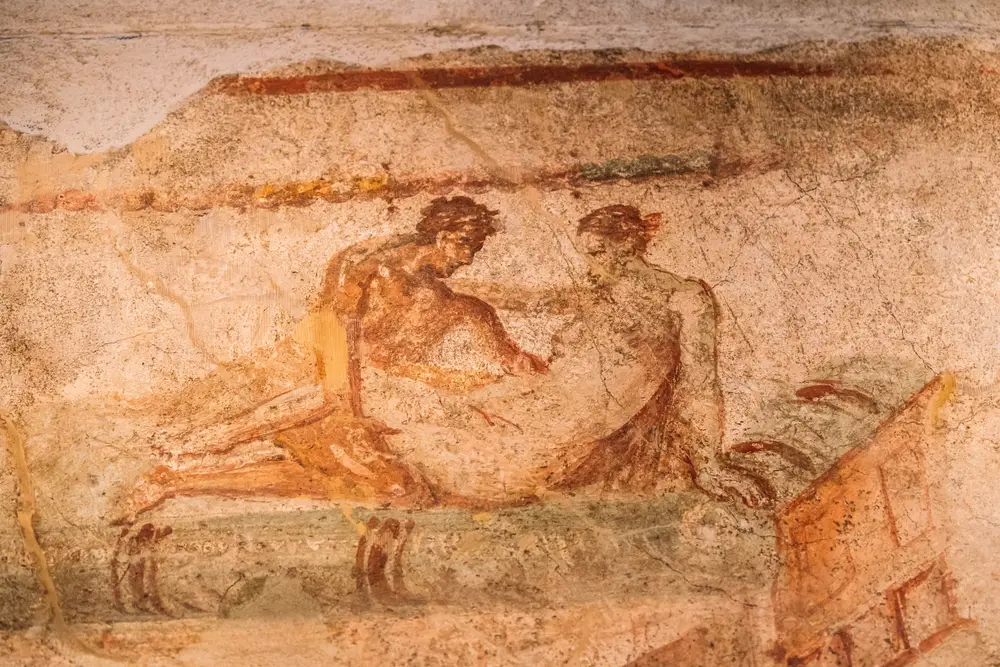
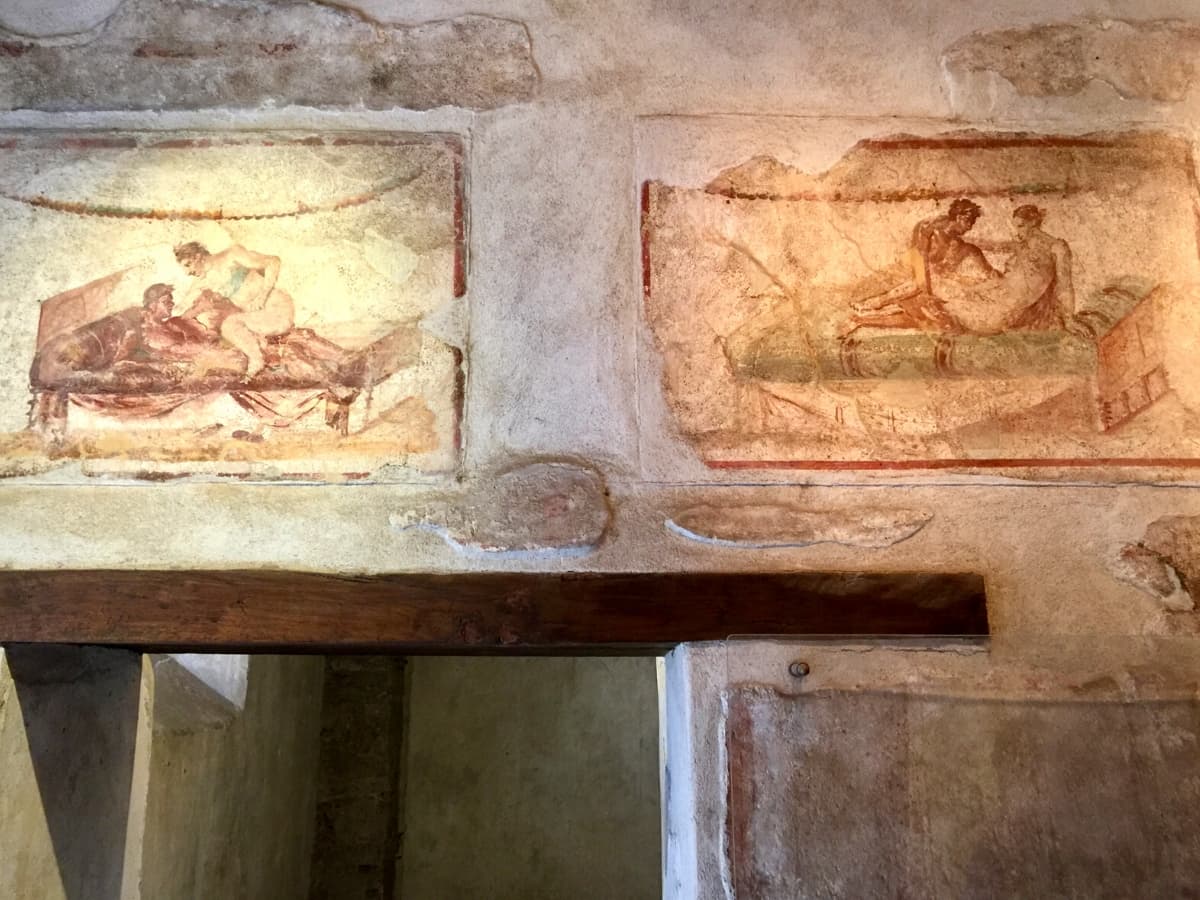
Viewing the ancient brothel architecture
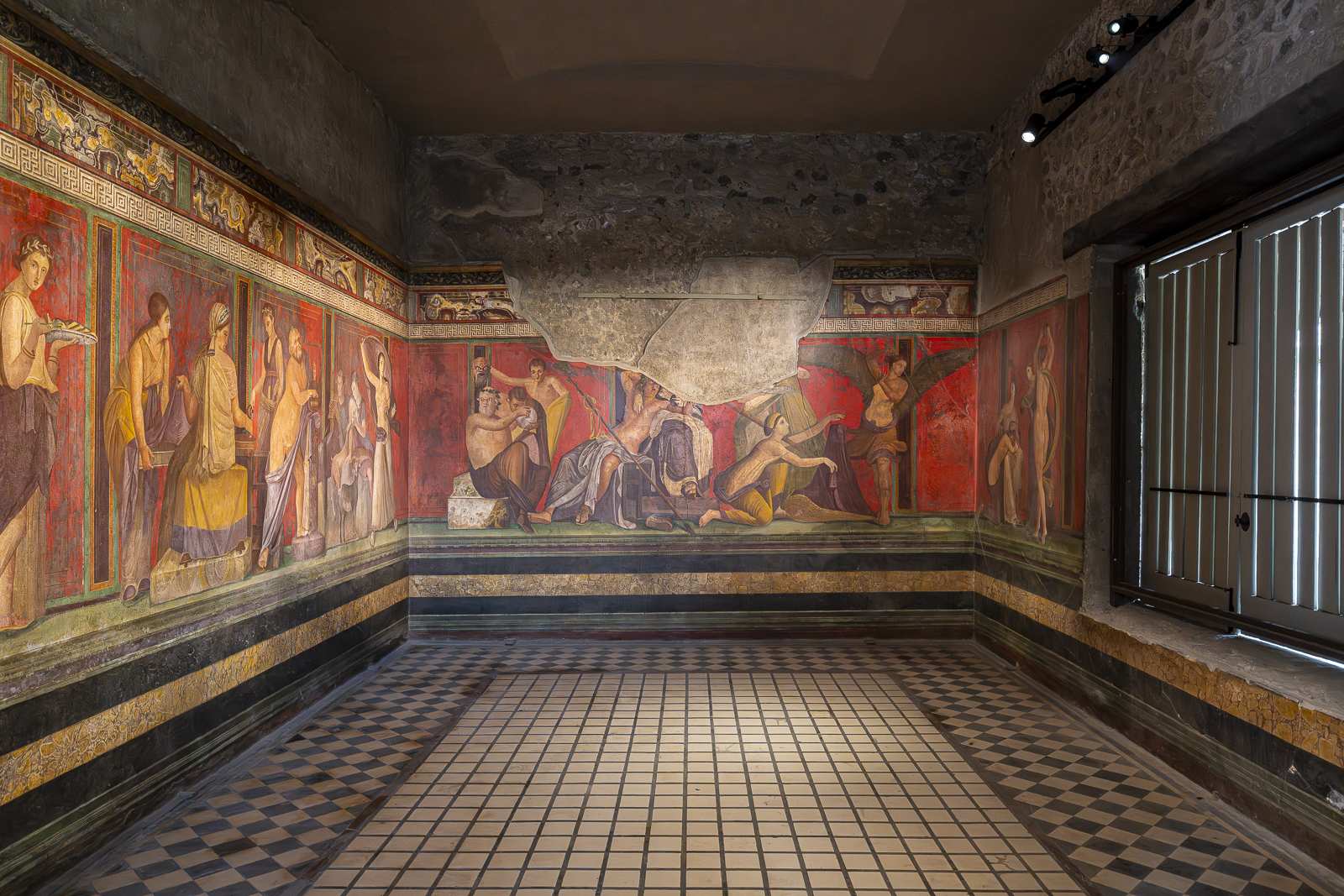
Observing preserved frescoes on the outskirts
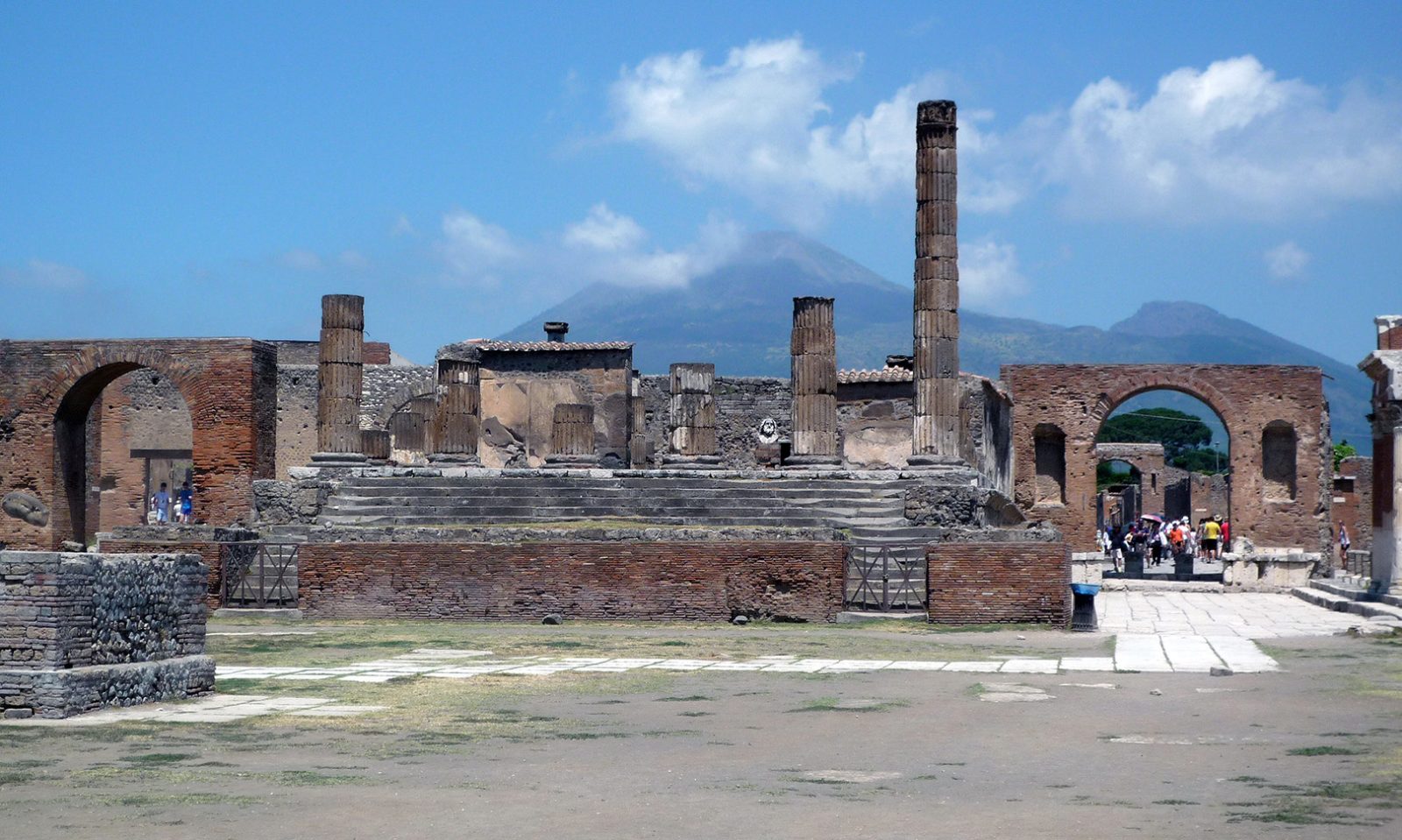
The central public square served as the religious and political heart of the city, surrounded by key monuments. It covers a vast rectangular space and is the best starting point for a Rome to Pompeii tour by train.
This famous structure displays ancient erotic frescoes that remain well-preserved today. It provides a unique look into daily social life during the Roman era.
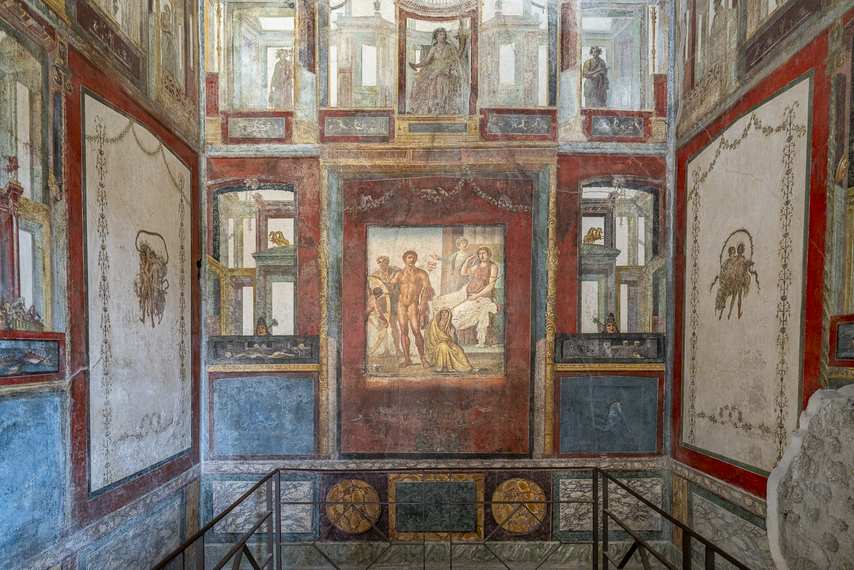
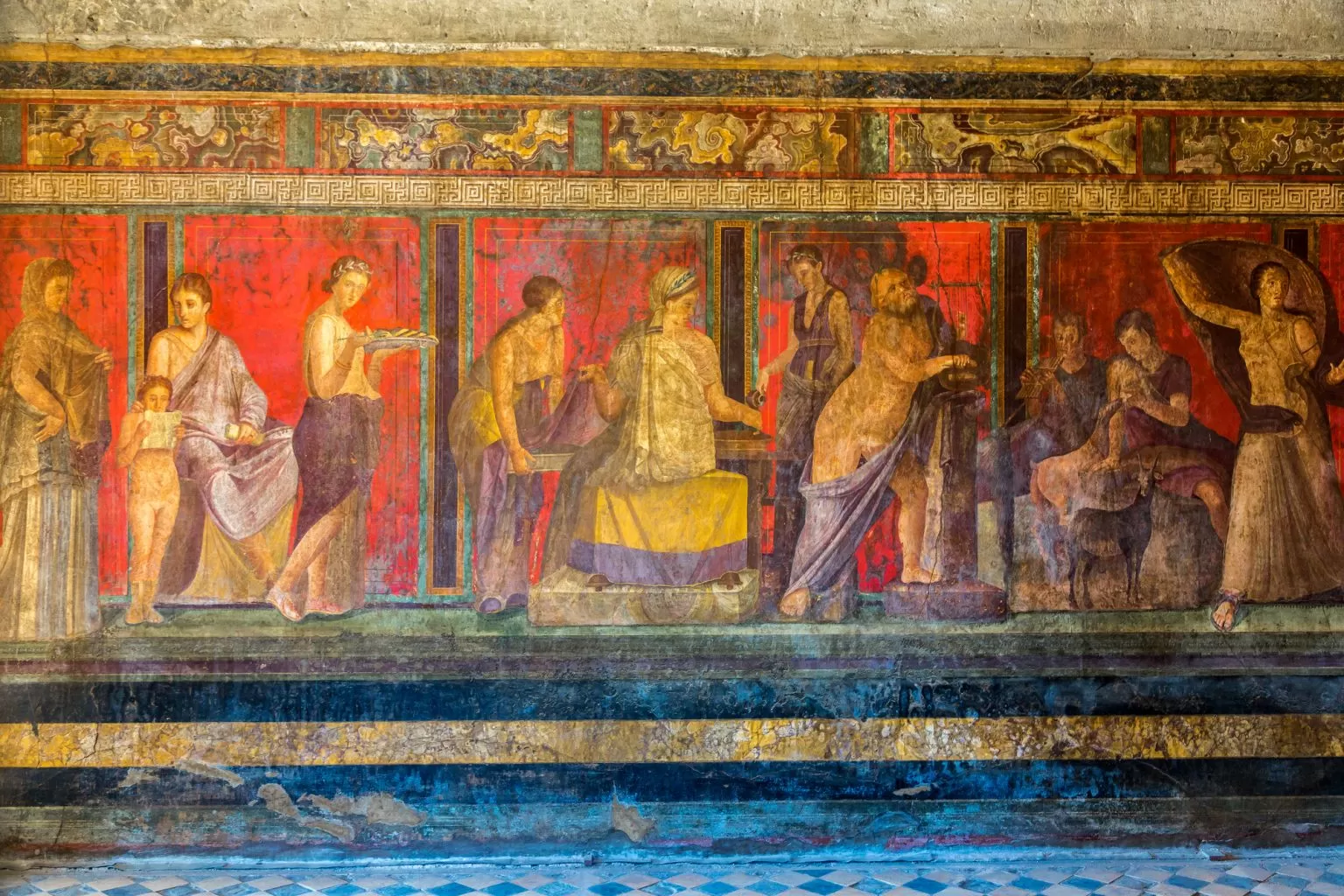
Located just outside the main city walls, this villa is renowned for its large, vibrant frescoes depicting initiation rites. It is a must-see for those on a Rome to Pompeii tour by train.
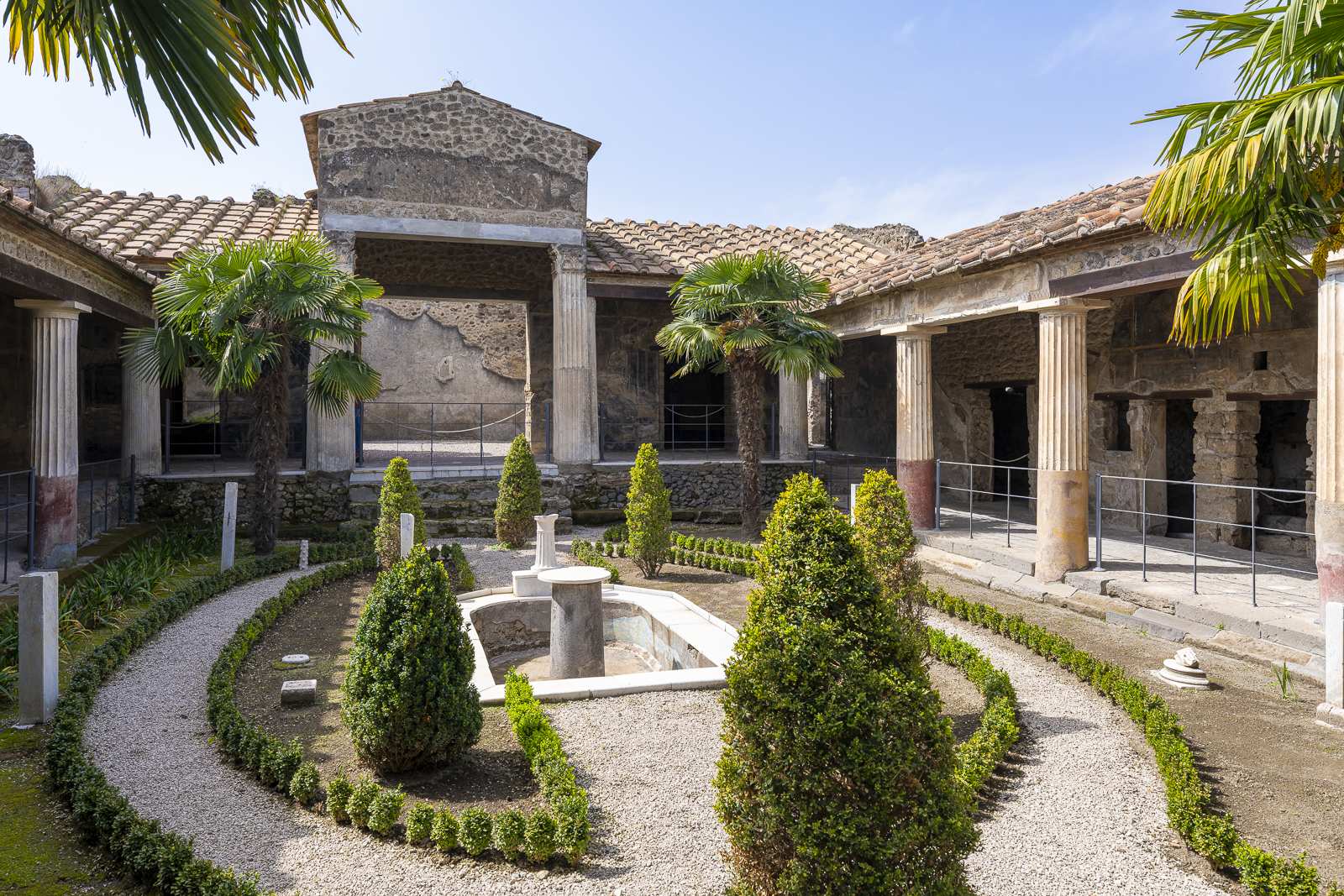
Named after a bronze statue found on-site, this is one of the largest and most grand private residences ever excavated. The architecture features an elaborate peristyle garden.
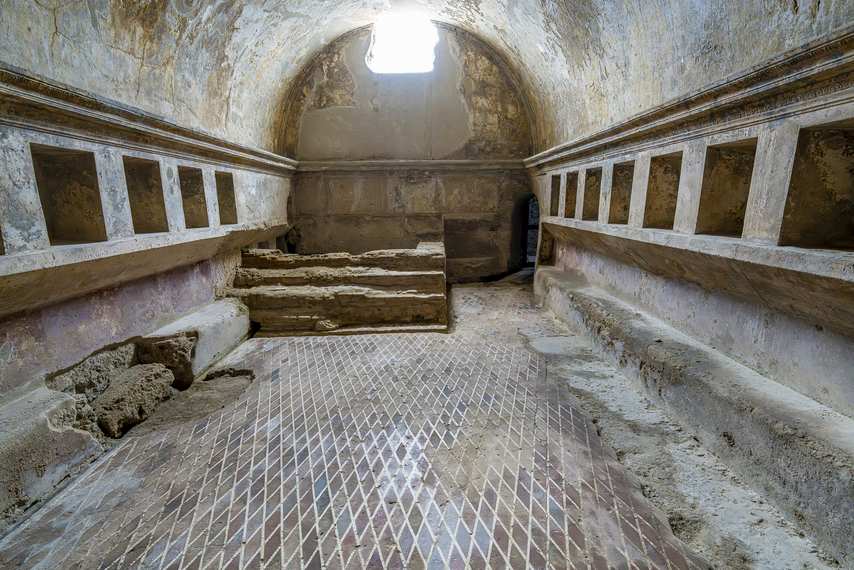
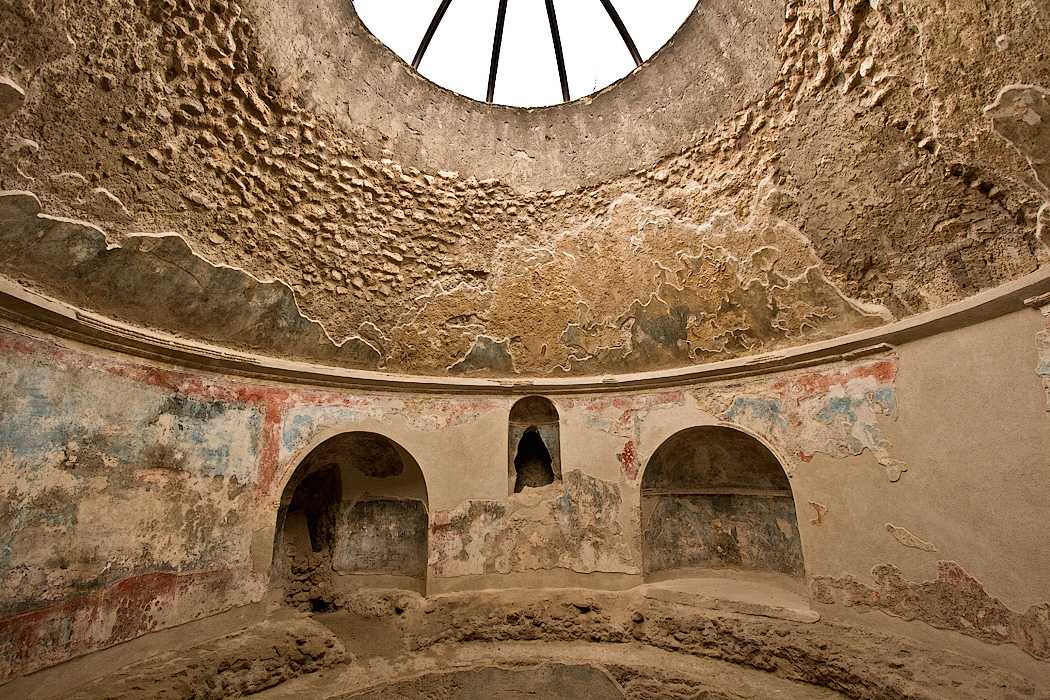
As the oldest public bathing complex in the city, it showcases sophisticated heating systems used by Romans. The site demonstrates advanced engineering for the first century.
You board the Frecciarossa at Roma Termini, settling into the high-speed carriage as the train pulls away from the capital and accelerates south through Lazio.
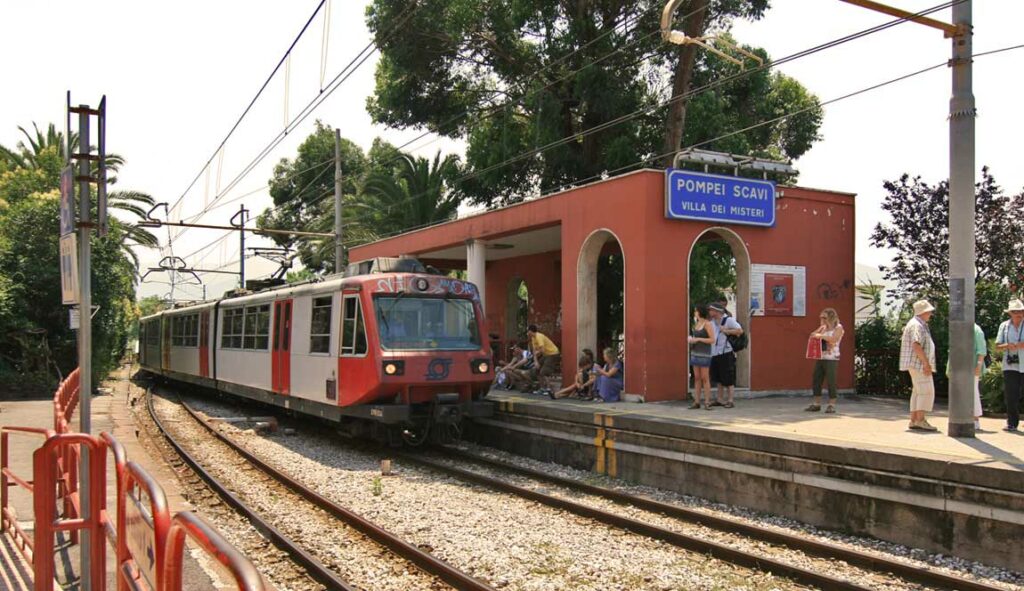
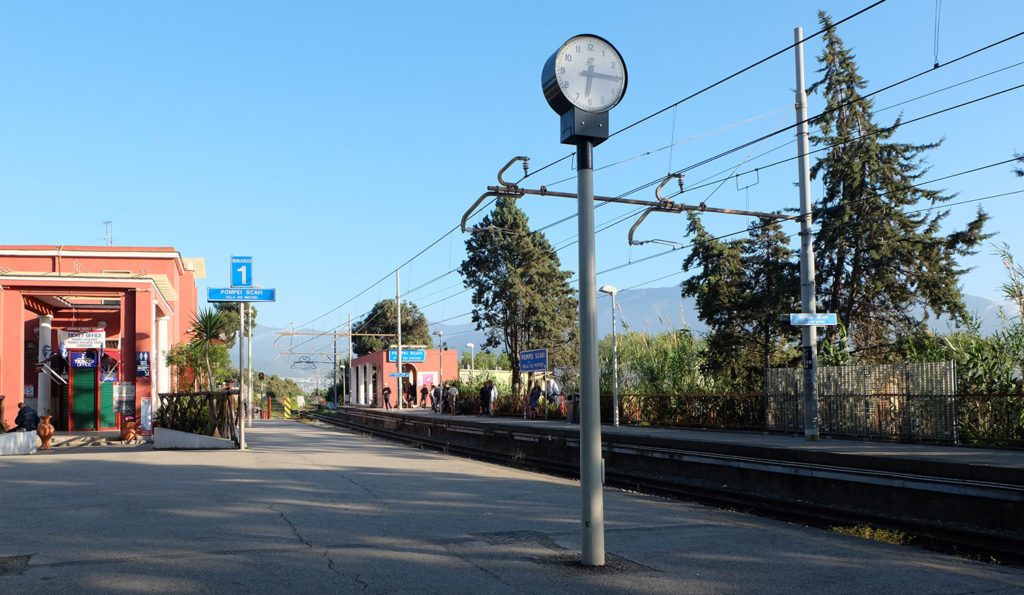
Sixty-five minutes later you step onto the platform at Napoli Centrale and follow the signs downstairs to the Circumvesuviana terminal, where the older commuter trains wait on narrow-gauge tracks. The Circumvesuviana rattles southeast through the suburbs, stops at Ercolano, then slows as it approaches Pompeii Scavi–Villa dei Misteri station. You exit and walk two hundred meters along Via Villa dei Misteri to the main entrance, where you scan your mobile voucher at the turnstile and pass through into the archaeological park.
The Forum opens before you, columns standing against Vesuvius in the distance. You walk the basalt paving stones of Via dell'Abbondanza, pausing at the Stabian Baths to see the frigidarium and the lead piping that fed the caldarium. You continue east to the amphitheater, then loop back through the residential quarter, stepping into the House of the Faun to view the Alexander mosaic replica and the impluvium courtyard. By early afternoon you have covered three kilometers on foot, the site emptying as tour groups board their coaches. You return to Pompeii Scavi station and catch the next Circumvesuviana north, retracing the route to Naples and connecting to the evening Frecciarossa that delivers you back to Rome by nightfall.
All the details about your upcoming adventure in one place
This rome to pompeii tour by train combines high-speed rail travel with guided exploration of the ancient city buried by Mount Vesuvius in 79 AD. Departing from Rome's central station, you'll journey south through Campania to reach the UNESCO-listed archaeological site, where preserved streets, frescoes, and plaster casts reveal daily life in a Roman city frozen in time. Rome to pompeii tour by train tickets include roundtrip train travel, site entry, and expert commentary on the Forum, thermal baths, and Villa of the Mysteries.
The Trenitalia high-speed corridor from Roma Termini to Napoli Centrale compresses two hundred seventy kilometers into sixty-five minutes, depositing travelers at the edge of Campania's coastal plain where Mount Vesuvius rises above the Bay of Naples.
From Naples, the Circumvesuviana commuter line threads south through Ercolano and Torre Annunziata, reaching Pompeii Scavi–Villa dei Misteri station in thirty-five minutes. The rome to pompeii train tour has become the default overland route for day-trippers who prefer Italian rail efficiency to motorcoach dependence, and the combined rail journey — Rome to Naples on Frecciarossa, Naples to Pompeii on the Circumvesuviana — delivers visitors to Via Villa dei Misteri by mid-morning.
Pompeii's archaeological zone sprawls across forty-four hectares, preserving the street grid, forum, amphitheater, and domestic quarters of a Roman port city frozen by the eruption of August 24, 79 CE. UNESCO inscribed the site in 1997, recognizing the carbonized roof beams, frescoed triclinia, and plaster casts of victims as unparalleled evidence of provincial Roman life. The rome to pompeii high speed train tour reduces transit time, granting visitors five to six hours on-site before the return leg. Excavations began under Charles III of Bourbon in 1748 and continue today, with recent work uncovering thermopolia, bakeries, and a ceremonial chariot in the Civita Giuliana suburban villa. The site receives three million visitors annually, peak density occurring between eleven and two.
The best rome to pompeii tours by train depart Rome before eight, allowing arrival at Pompeii by nine-thirty and placement ahead of cruise-ship groups that flood the Forum after ten. The rome to pompeii train travel time — approximately two hours station to station — permits same-day return, with last Circumvesuviana departures leaving Pompeii Scavi at twenty-two-fifty. Rail tickets are sold separately from archaeological site admission; the standard Pompeii Express entrance costs twenty euros and includes access to all public zones except the newly reopened House of the Vettii, which requires a timed supplement. Mobile vouchers replaced paper tickets in 2023, and advance booking through the official pompeiisites.org portal eliminates ticket-office queues at Via Villa dei Misteri. The rome to pompeii train day trip remains the most flexible independent option, unburdened by coach schedules or group assembly points, and the Circumvesuviana frequency — departures every twenty minutes during daylight hours — accommodates spontaneous schedule adjustments.

Pompeii's forty-four hectares preserve the only complete Roman street grid frozen by volcanic catastrophe.
Wear comfortable walking shoes suitable for uneven Roman basalt paving. Sun protection including hats and light clothing is recommended during the summer season.
Large backpacks and luggage exceeding 30x30x15 cm are prohibited. Security checks are mandatory at entrance gates for all visitors.
Personal photography is permitted for non-commercial use. Tripods, drones, and professional equipment require prior authorization from the archaeological park.
Strollers are permitted but may be difficult to maneuver on ancient roads. Baby changing facilities are located near the main entrance.
A dedicated 'Pompeii for All' route provides wheelchair access to major sectors. Some areas remain difficult to navigate due to historical topography.
Consuming food is restricted to designated picnic areas within the site. Carry a reusable water bottle to refill at ancient fountains.
Opening Hours
09:00–19:00
Address
Via Villa dei Misteri, 2, 80045 Pompeii, Naples, Italy
Site Navigation
Extensive uneven ancient stone pathways
Peak Hours
Avoid midday heat by arriving 09:00–09:30
Storage
Strict limits on bag dimensions
Official Site
pompeiisites.org
Public transport · 3 hours · 20–50 EUR
Take the high-speed train from Rome Termini to Naples Centrale. Transfer to the Circumvesuviana line toward Sorrento and exit at Pompeii Scavi.
Standard Pompeii Express tickets for 20 EUR are typically non-refundable once issued. Confirm specific operator terms for your Rome to Pompeii tour by train if booking through a third party.
Recommended time
4-5 hours
A well-planned rome to pompeii tour by train requires at least four hours to navigate the vast archaeological site and view the haunting plaster casts. Arriving during the 09:00–09:30 best arrival window helps you beat the heaviest influx of day-trippers from Naples. Exploring these ancient cobblestone streets becomes increasingly difficult by midday as heat and density rise, making early rome to pompeii tour by train tours the most effective strategy. If you secure your rome to pompeii tour by train tickets in advance, you can move directly to the entrance and prioritize the forum and bath complexes before the afternoon peak.
Crowd levels through the day
Weather · crowds · average price — dots go green to amber to red as each metric rises.
Mild temperatures make walking the city streets comfortable. Ideal for longer exploration without intense heat.
High temperatures occur during these months. Arrive at 09:00–09:30 to mitigate midday sun.
Cooler weather returns to the Campania region. Ideal for photography of the Roman ruins.
Lowest crowd density of the year. Some outdoor areas may have shorter visibility hours.
Arrive between 09:00–09:30 to avoid the primary rush of a Rome to Pompeii tour by train group. This ensures smoother access through the main gates.
Purchase your 20 EUR ticket online to save time. Carry the digital pass on your phone for a seamless Rome to Pompeii tour by train arrival.
Use the historic fountains located throughout the site. These provide cold, drinkable water throughout the day.
Ancient streets feature uneven stones. Choose supportive walking shoes rather than sandals for your Rome to Pompeii tour by train experience.
The park is vast, so book an official guide to maximize your Rome to Pompeii tour by train visit. Focus on key sectors to avoid fatigue.
Pompeii was a thriving Roman commercial hub of fifteen thousand residents when Vesuvius erupted on August 24, 79 AD. The volcano had been dormant for centuries, and citizens ignored early tremors. At midday, a column of pumice and ash rose twenty miles into the atmosphere. By evening, roofs collapsed under volcanic debris. A pyroclastic surge traveling at four hundred miles per hour obliterated the city at dawn on August 25, burying it under thirteen feet of material. Pliny the Younger documented the catastrophe from Misenum across the bay, recording the death of his uncle, Pliny the Elder, who commanded the rescue fleet. The eruption entombed bodies in ash that hardened around them, preserving voids that would later reveal their final postures. The site vanished from memory for seventeen centuries. In 1748, Spanish engineer Rocque Joaquin de Alcubierre began systematic excavation under Charles VII of Naples, initially seeking art for the royal collection. Workers uncovered frescoes, mosaics, and intact amphorae. Giuseppe Fiorelli became director in 1863 and pioneered the plaster-cast technique, pouring liquid plaster into body cavities to capture victims frozen in their last moments. Excavation continued through the twentieth century, revealing bakeries with carbonized loaves still in ovens, election graffiti on walls, and erotic frescoes in the lupanar brothel. UNESCO designated Pompeii a World Heritage Site in 1997. Today, visitors planning a rome to pompeii tour by train encounter sixty-six hectares of exposed ruins, though one-third of the ancient city remains buried. The Great Pompeii Project, launched in 2012 with European Union funding, stabilized fragile structures and reopened previously inaccessible houses, including the House of the Silver Wedding and the House of the Vettii with its vivid mythological panels.
Vesuvius erupts on August 24, burying Pompeii under thirteen feet of pumice and ash in less than twenty-four hours.
Architect Domenico Fontana uncovers painted walls while digging a canal but does not recognize the site as Pompeii.
Spanish engineer Rocque Joaquin de Alcubierre begins systematic excavation under Charles VII of Naples, initially for royal art collection.
Giuseppe Fiorelli becomes director and pioneers the plaster-cast technique to preserve human body cavities left in hardened ash.
UNESCO designates Pompeii a World Heritage Site, recognizing its unparalleled preservation of Roman urban life.
The Great Pompeii Project secures European Union funding to stabilize structures and reopen houses including the House of the Vettii.
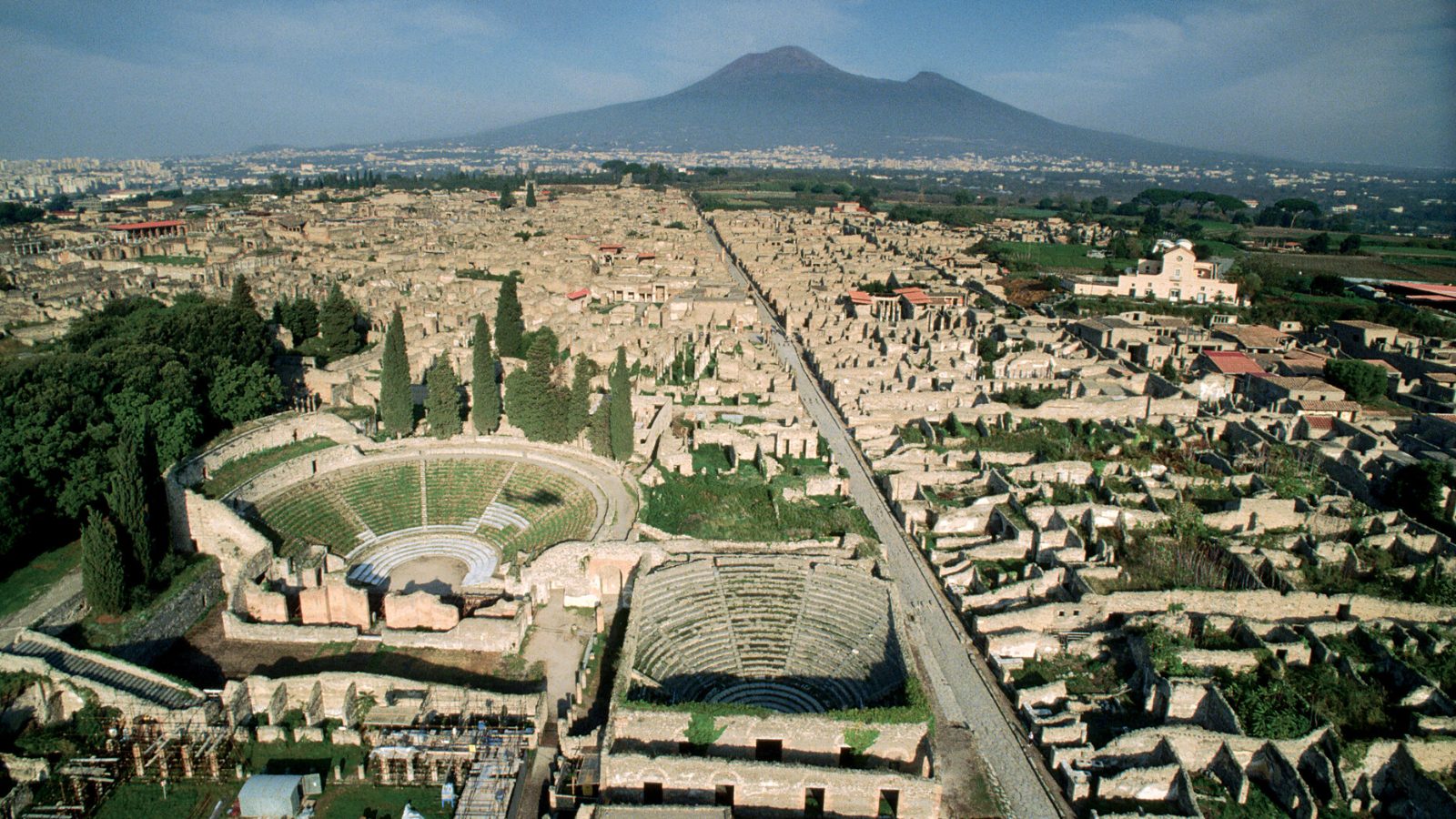
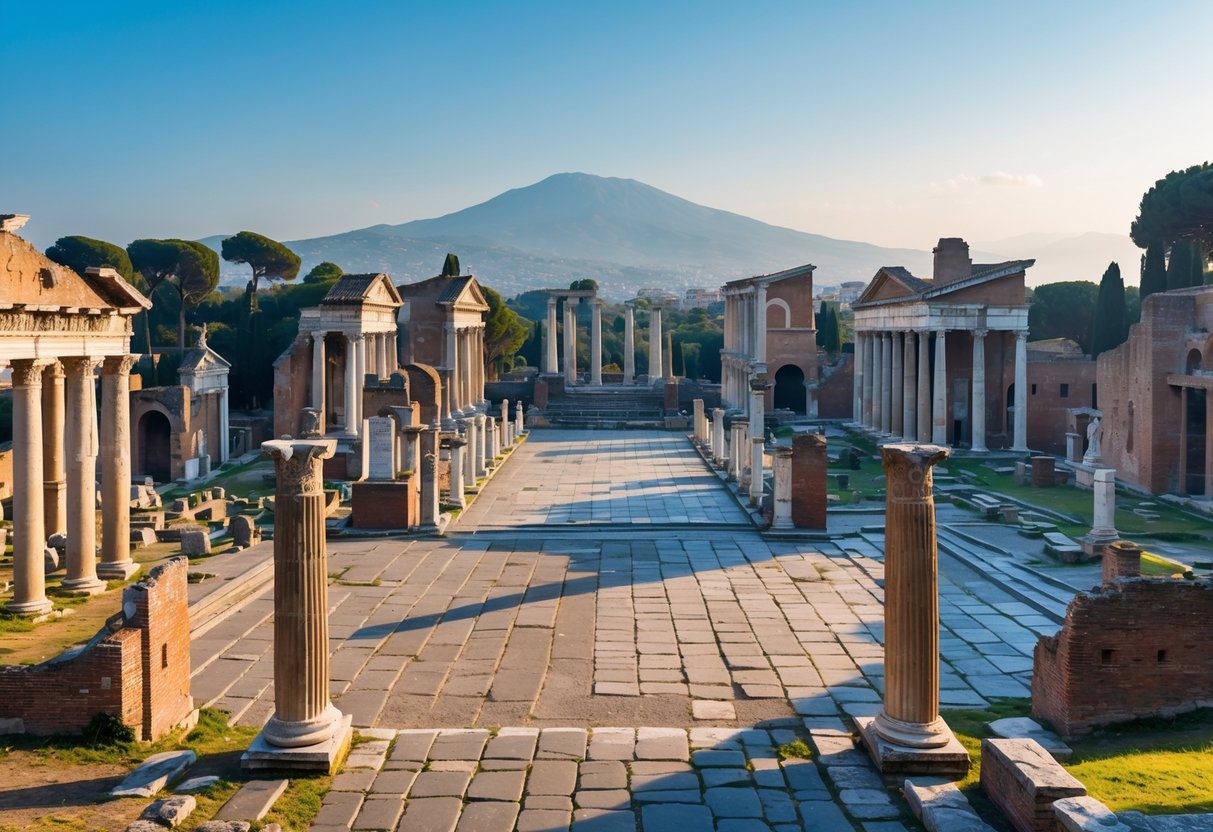
Stand at the north end of the plaza to capture the open space with the peak of the volcano looming in the background. This perspective provides a clear sense of the ancient urban layout during your rome to pompeii tour by train.
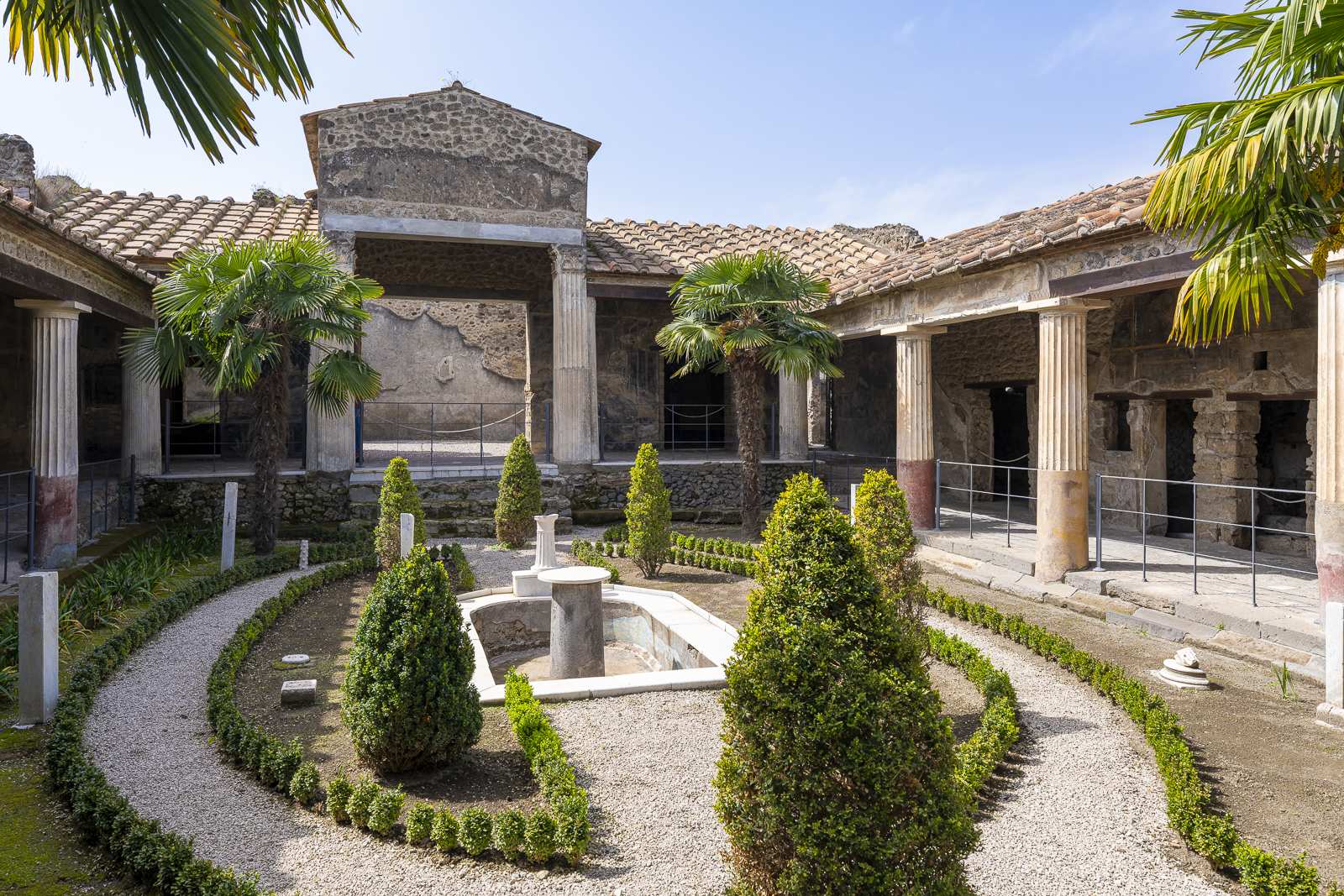
Position yourself within the central peristyle to photograph the preserved frescoes and detailed garden colonnades. These intricate wall paintings serve as a primary subject for historians and photographers alike.
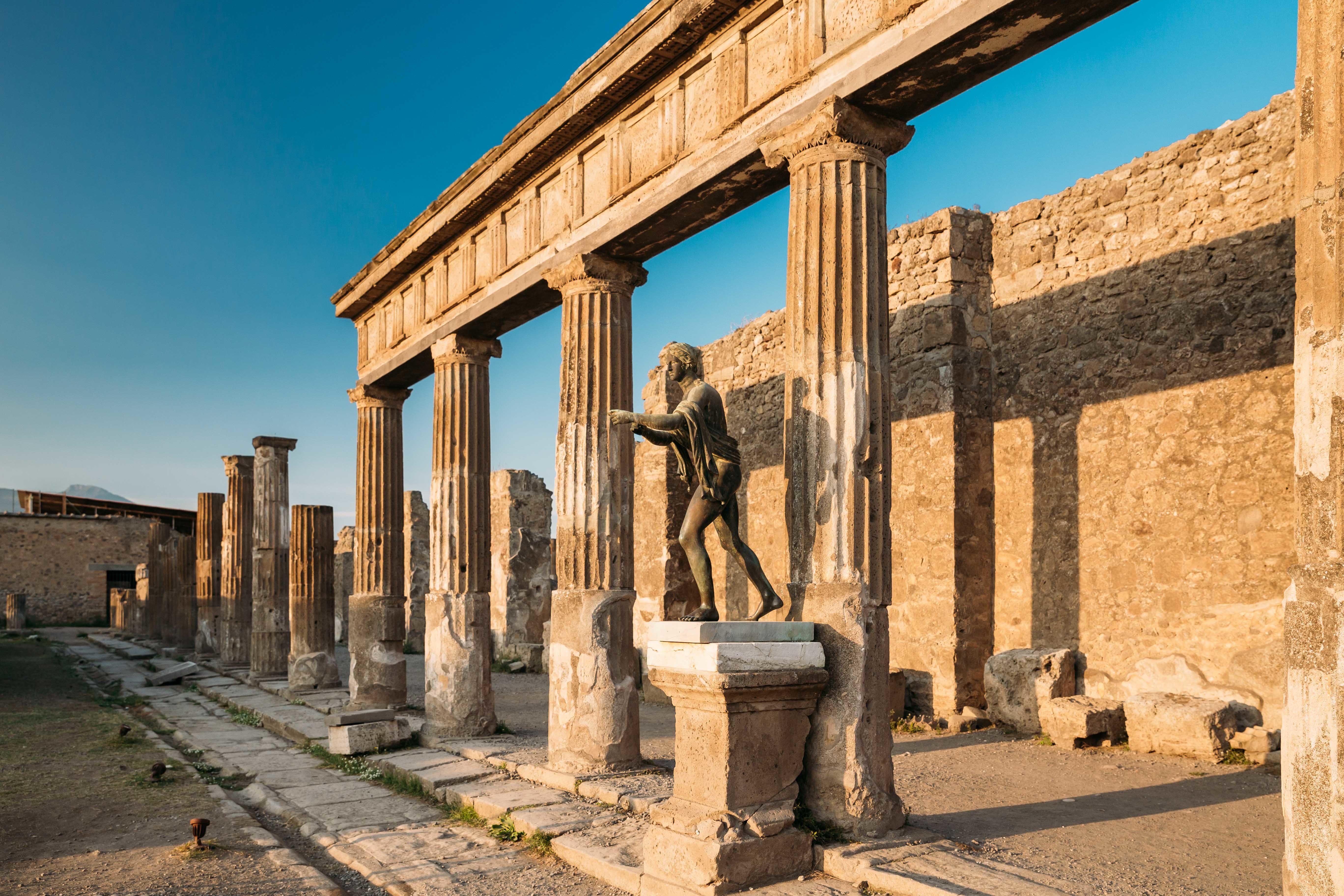
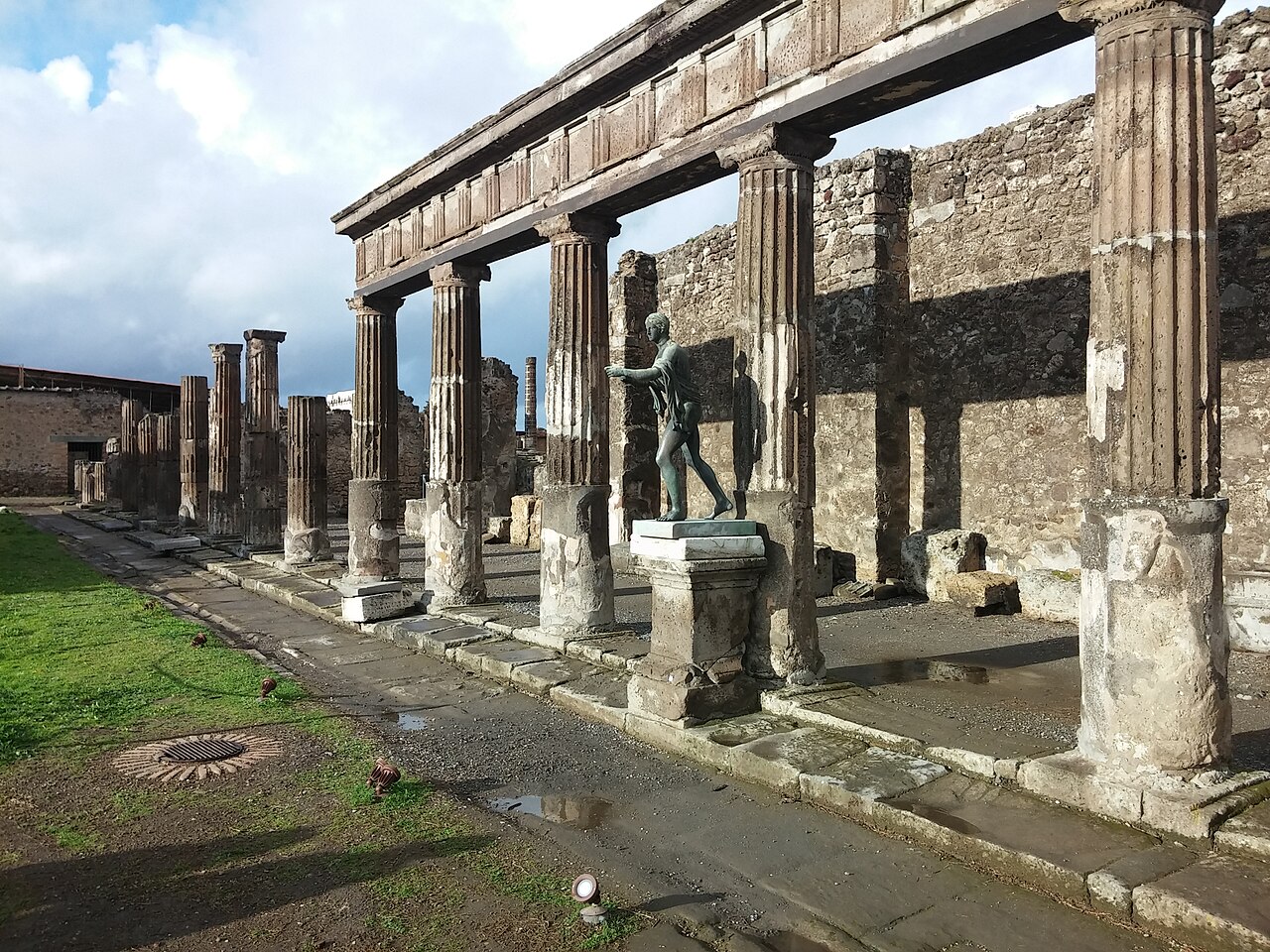
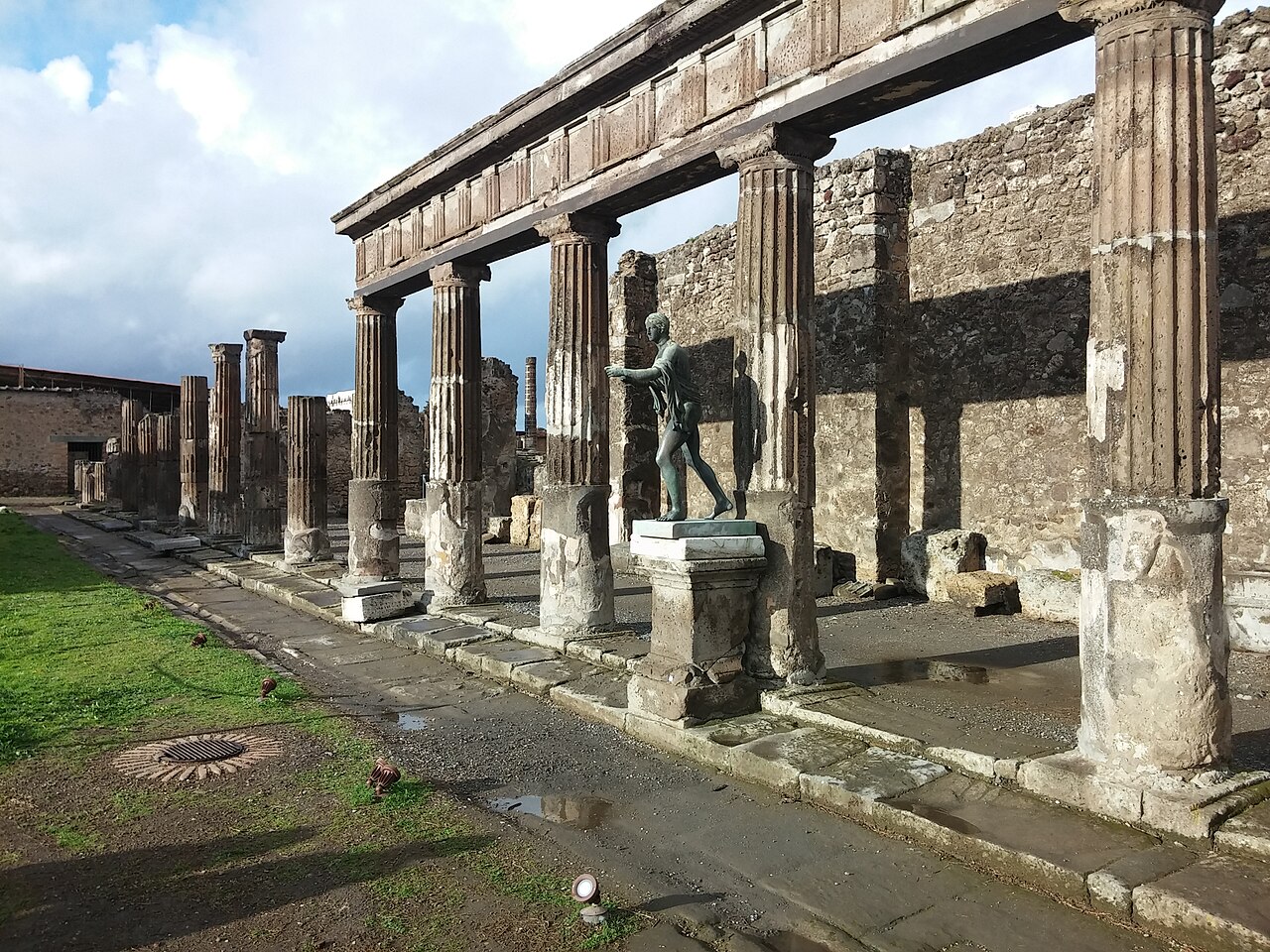
Capture the contrast between the preserved bronze statue in the foreground and the surrounding limestone columns. This spot offers a symmetrical composition ideal for architectural photography on rome to pompeii tour by train tours.
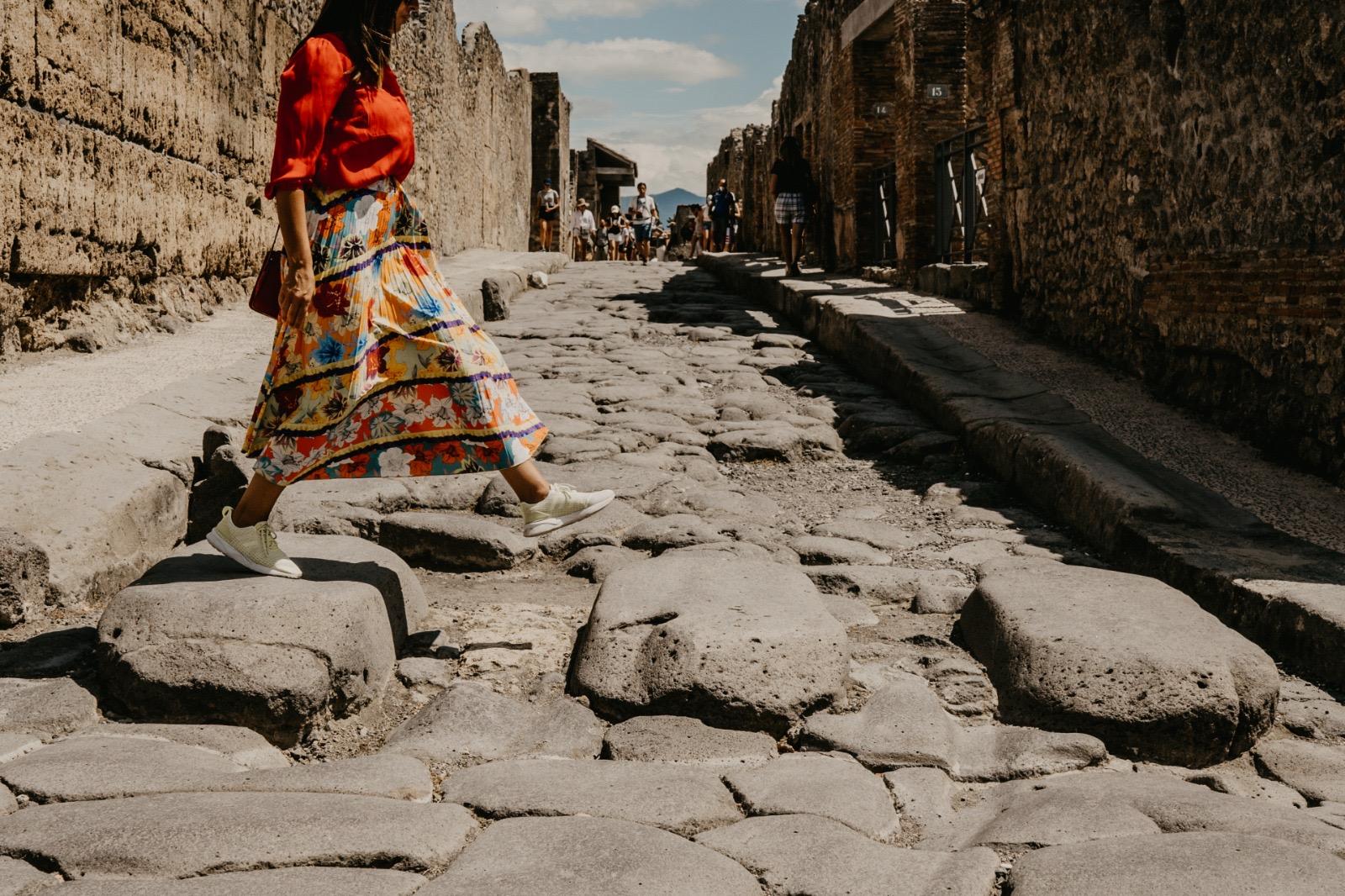
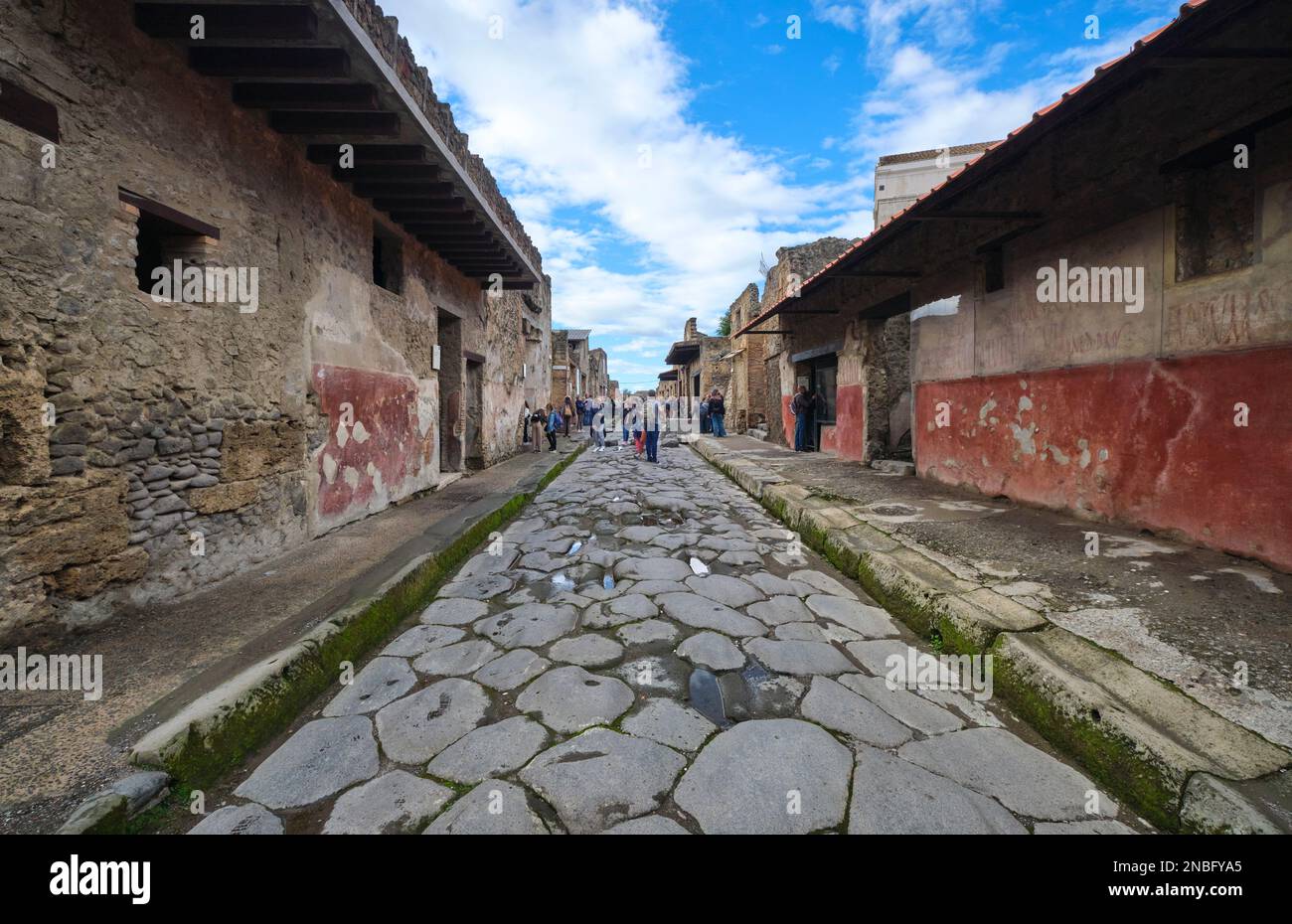
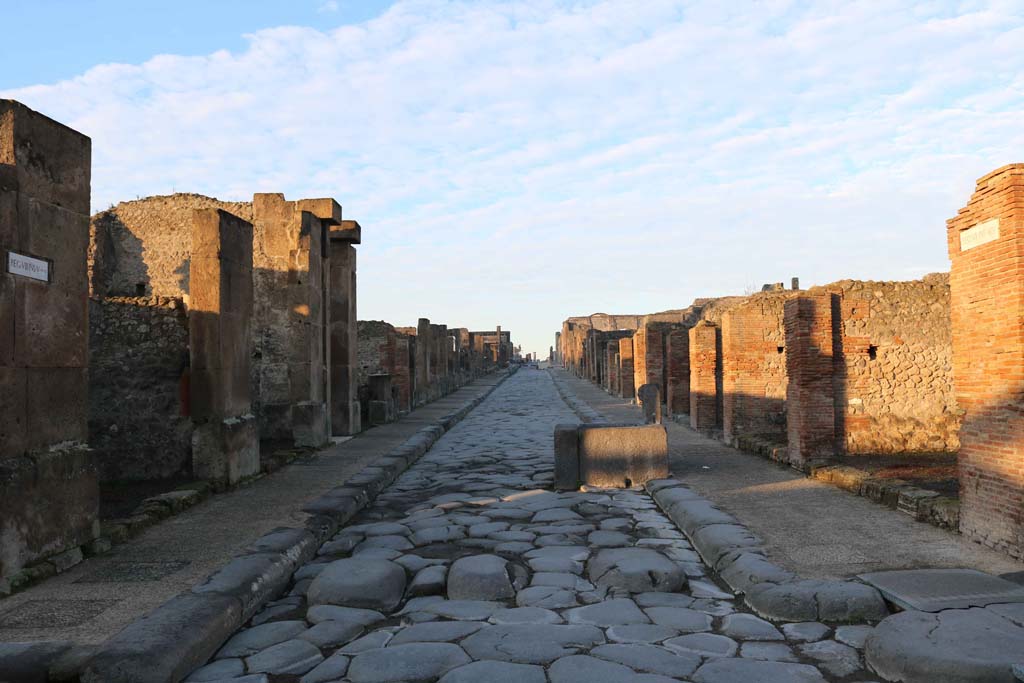
Frame your shot down the center of this primary thoroughfare to show the raised stepping stones and deep wheel ruts in the volcanic basalt. This location illustrates the daily engineering of the Roman Empire for those seeking rome to pompeii tour by train tickets.
Move to the outer chambers to capture the large-scale panoramic wall paintings known for their vivid cinnabar red pigments. Use a tripod or stable surface to account for lower light levels in these sheltered rooms during your rome to pompeii tour by train tour.
Visitors completing a rome to pompeii tour by train will find limited options inside the archaeological park, so planning a meal just outside the gates is advised. Several reliable trattorias and cafes are situated within a short walk of the Via Villa dei Misteri entrance, perfect for refueling after exploring these ancient Roman ruins.
This themed restaurant recreates an ancient Roman tavern atmosphere. It is a popular stop for those on rome to pompeii tour by train tours seeking a historical dining experience alongside their site visit.;Bar Florida
Real experiences from real travelers
Our rome to pompeii tour by train was flawlessly organized. The Trenitalia Frecciarossa departed Termini exactly on schedule and we arrived in Naples within seventy minutes. The Circumvesuviana connection to Pompei Scavi station took another forty minutes but the signage was clear. Walking through the Forum at midday with Vesuvius looming overhead felt surreal—you can still see the chariot ruts carved into basalt paving stones.
Taking the train from Rome to Pompeii turned out to be the highlight of our Italian trip. We booked a morning Frecciarossa and had three full hours to explore the archaeological park before the afternoon heat peaked. The House of the Vettii frescoes are astonishingly vivid in person. Bring water and wear a hat—there is almost no shade among the ruins.
The high-speed rail option made this day trip entirely feasible. We left Rome at eight and were walking the ancient streets by eleven. The excavated bakery with its intact millstones and the plaster casts in the Garden of the Fugitives are haunting reminders of the eruption. Our rome to pompeii tour by train tickets included a reserved seat which made the return journey stress-free even during peak hours.
Pompeii exceeded expectations but the Circumvesuviana leg from Naples can get crowded. The ruins themselves are vast—we covered maybe half the open areas in three hours. The amphitheater at the far eastern edge is worth the walk. If you are doing a rome to pompeii tour by train without a guide, download an offline map because cell signal inside the site is patchy.
We took the early Frecciarossa and arrived before the tour groups. The Temple of Apollo columns glowed pink in the morning light. The frescoes inside Villa dei Misteri remain vivid after two millennia. Traveling by rail from Rome to Pompeii gave us flexibility—we stayed until closing and caught a late train back without feeling rushed.
The rome to pompeii tour by train route is straightforward once you understand the two-train system. Naples Centrale is busy but transfers are well marked. Standing in the Forum where ancient Romans conducted daily commerce while Vesuvius filled the skyline was deeply moving. The site is enormous—wear comfortable shoes and start early.
High-speed rail made this day trip practical without an overnight stay. The Pompeii Scavi station sits directly at the main Porta Marina entrance which saved time. We spent four hours wandering House of the Tragic Poet, the Stabian Baths, and Via dell'Abbondanza. The level of preservation—down to carbonized wooden beams—is extraordinary. Train tickets for our rome to pompeii tour by train were easy to book online a week in advance.
The journey from Rome Termini to Naples is fast and scenic. Circumvesuviana trains run frequently to Pompei Scavi though they are more utilitarian than the Frecciarossa. Once inside the gates the scale of the buried city becomes clear—block after block of shops, homes, temples. The plaster casts are sobering. A rome to pompeii tour by train tours option gave us an audio guide which added valuable context to what we were seeing.
Taking the train allowed us to avoid driving and parking headaches. We explored the Lupanar with its explicit frescoes, the Grand Theatre built into the hillside, and multiple villas with intricate mosaic floors. Mount Vesuvius is visible from nearly every corner of the ruins. The sense of walking through frozen history is palpable. Our rome to pompeii tour by train tickets included fast-track entry which saved thirty minutes in the queue.
The rail journey from Rome is comfortable and the archaeological site is staggering in scope. We arrived mid-morning and had the House of the Faun nearly to ourselves. The bronze faun statue is a replica but the Alexander Mosaic floor pattern is still visible. Bring sunscreen—the volcanic stone streets amplify the heat. Returning to Rome by evening train felt efficient and relaxed.
Everything you need to know for your journey
The site is open daily from 09:00–19:00. This schedule allows for a full day of exploration for your Rome to Pompeii tour by train.
The standard entrance fee is 20 EUR for a foreign adult. Always verify your booking includes these tickets when arranging your Rome to Pompeii tour by train.
The best arrival window is 09:00–09:30. Early arrival is essential to beat the heat and crowds during your Rome to Pompeii tour by train visit.
Yes, the 'Pompeii for All' route provides access for those on a Rome to Pompeii tour by train. Note that some peripheral areas remain challenging.
Bags larger than 30x30x15 cm are not allowed inside. Use secure storage at the entrance during your Rome to Pompeii tour by train.
Personal photography is allowed during your Rome to Pompeii tour by train. Professional equipment requires prior authorization.
Food is restricted to picnic areas only. Please respect the preservation rules during your Rome to Pompeii tour by train.
Use the train from Rome Termini to Naples, then transfer to the Circumvesuviana line for your Rome to Pompeii tour by train.
There are no age restrictions for visiting. Families often enjoy the educational aspects of a Rome to Pompeii tour by train.
A key sanctuary located in the main Forum area.
Features famous mosaics and a large peristyle courtyard.
The oldest preserved public baths in the city.
Central district with easy access to ruins.
Coastal hotels offering scenic Mediterranean views.
Join thousands of happy travelers who have discovered this incredible experience
Book Your Experience Now